

本公司其它产品
品牌名称:
Product Introduction
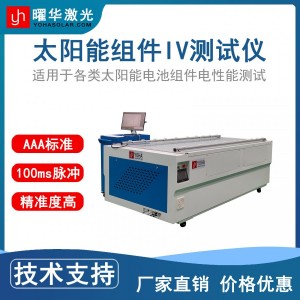
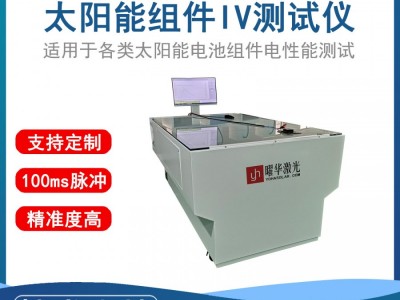
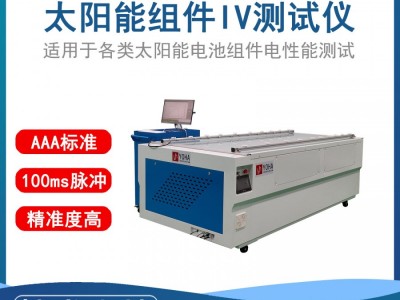
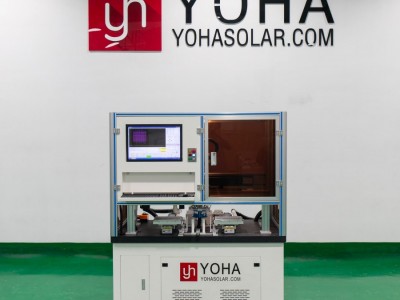
The Solar Module IV Tester is a key professional testing device that simulates solar illumination under Standard Test Conditions (STC) to quickly and accurately measure and plot the current-voltage (IV) characteristic curve of photovoltaic (solar) modules. It further analyzes core performance parameters such as open-circuit voltage, short-circuit current, power point, fill factor, and conversion efficiency, serving to evaluate module power output capacity, detect potential defects, conduct quality grading, and verify product specification compliance.
Product Features
High-Speed and Accurate Measurement: Adopts advanced electronic load and control system, capable of completing a full IV curve scan within seconds. Delivers high-precision current, voltage, and power data to meet the requirements of high efficiency and fast beat in production lines while ensuring test result reliability.
Comprehensive Parameter Analysis: Not only measures basic open-circuit voltage (Voc) and short-circuit current (Isc) but also accurately calculates and reports key performance indicators including maximum power point (Pmax), operating voltage (Vmp), operating current (Imp), fill factor (FF), and conversion efficiency (η). Provides robust data support for module performance evaluation and quality grading.
Standard Compliance and Automated Integration: Strictly adheres to photovoltaic testing standards such as the IEC 60904 series, ensuring the standardization of test conditions and comparability of results. Equipped with rich communication interfaces, it can be easily integrated into automated production lines or laboratory information management systems, enabling automated test processes, real-time data upload, and traceability management to improve overall quality inspection efficiency.
Stability, Reliability, and Intelligent Diagnosis: Utilizes high-quality components and a robust design to ensure long-term stable operation in industrial environments. Some models feature intelligent analysis functions that can issue early warnings for potential defects based on abnormal IV curve patterns (e.g., steps, burrs, slope changes), assisting in rapid problem localization (such as microcracks, hot spots, poor welding, PID effects, etc.) and enhancing quality control levels.
Technical Parameters
| Item | Specification |
|---|---|
| Model | YHMT-AAA |
| Light Source | Complies with IEC 60904-9:2020 spectral requirements (Class A) |
| Spectral Range | 300~1200nm |
| Irradiance | 1000W/㎡ (200~1200W/㎡) |
| Irradiance Uniformity | ≤2% (Class A) |
| Irradiance Stability | ≤2% (Class A) |
| Test Result Consistency | ≤1% |
| Electrical Performance Measurement Error | ≤2% |
| Single Flash Pulse Width | 10ms |
| Effective Test Area | 2300*1200mm |
| Power Supply | 220V/50HZ |
| Equipment Dimensions | 2900×1770×1065mm |
Product Applications
Full Inspection and Grading in Production Lines: Conducts online power testing for each module during manufacturing, realizing quality grading (Grade A/B/C) based on parameters such as maximum power point (Pmax) and open-circuit voltage (Voc). Ensures that the power of delivered modules meets the ±3% tolerance requirement, and real-time feeds back welding or lamination defects through IV curve abnormalities (e.g., steps, low fill factor).
Laboratory R&D and Certification: Used for efficiency verification of new battery technologies (HJT/perovskite, etc.), and quantitative analysis of performance degradation after reliability tests such as damp-heat cycling and PID aging in accordance with IEC 61215 standards. Provides key data support for technological iteration and product certification.
Power Plant Acceptance and Operation & Maintenance: Spot-checks the power of incoming modules during power plant construction (avoiding the risk of over 10% false labeling). During operation and maintenance, locates faults such as hot spots and diode failure through abnormal IV curves (multi-peak/sudden slope change) combined with infrared thermal imaging, and regularly evaluates whether the annual average attenuation rate of modules exceeds the 0.8% threshold.
Recycling Evaluation of Decommissioned Modules: Quickly detects the residual power generation capacity of used modules (reaching 70%~85% of the initial power), screens refurbishable modules to prevent PID-deteriorated products from entering the market. Meanwhile, guides the whole-piece reuse of high-power modules and the disassembly and recycling of silicon materials/silver paste from low-power modules, realizing resource value utilization.
Precautions
Strictly Follow Light Source Operation Specifications: The equipment emits high-energy, high-brightness intense light pulses. Never look directly at the light source or open the test chamber door during testing.
Ensure Reliable Grounding and Electrical Isolation: The equipment involves high-voltage and high-current output. Reliable grounding is required, and the power supply must meet specification requirements. Regularly inspect cable insulation.
Control Test Environment Temperature and Humidity: Module performance is significantly affected by temperature. Before testing, fully preheat/precool the module to the set temperature (usually 25℃±1℃) and real-time monitor the module surface temperature (using a calibrated contact sensor). Environmental humidity must be controlled within the specified range (usually <60% RH) to prevent condensation or high-voltage discharge risks.
Properly Use Test Fixtures: Regularly clean test fixtures to prevent oxidation. Avoid poor contact that may cause measurement errors or local overheating damaging the module.
Regularly Calibrate and Maintain Core Equipment Components: Core measurement units including light source intensity (irradiance uniformity, stability), current/voltage sensor accuracy, and temperature probes need regular calibration in accordance with standards (such as IEC 60904 series). Meanwhile, maintain optical components (clean lenses/reflectors) and mechanical movement mechanisms to ensure stable and reliable equipment status.
Standardize Operation Procedures and Parameter Settings: Accurately input module parameters (such as nominal power, type) before testing. Carefully set pulse width and voltage intensity to avoid irreversible thermal damage to the module caused by excessively long/strong pulses (especially for thin or temperature-sensitive materials). Allow the module to fully cool down before the next test or removal after testing. When handling abnormal data, investigate factors such as environment, contact, and equipment status. Never arbitrarily alter or ignore abnormal results.

-
面议
立即询价 -

面议
立即询价 -
面议
立即询价


