

本公司其它产品
品牌名称:
Product Introduction
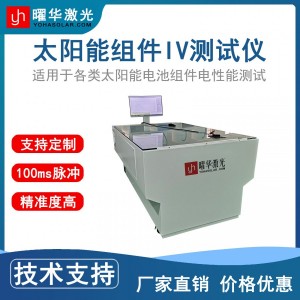
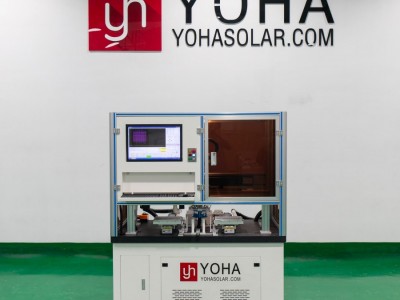
The Small PV Module IV Tester is a professional testing device that adopts a pulsed light source to simulate Standard Test Conditions (STC). It is specially designed for rapidly and accurately measuring the Current-Voltage (IV) characteristic curves of single solar cells, single cell strings, small modules or samples, and automatically calculates their key performance parameters (e.g., open-circuit voltage Voc, short-circuit current Isc, maximum power Pmax, fill factor FF, conversion efficiency). Equipped with a module grade judgment function, it is widely used in R&D laboratories, production line quality control, incoming material inspection and failure analysis.
Product Features
Accurate & Fast Pulsed Testing
Adopting a high-precision pulsed light source to instantaneously simulate STC, it can complete a single IV characteristic measurement in milliseconds, minimizing the impact of temperature rise on the tested modules and ensuring the accuracy and repeatability of measurement results (Voc, Isc, Pmax, FF, efficiency, etc.).
Fully Automatic Measurement & Data Analysis
With one-click start, the device automatically completes IV curve scanning and data collection. Its built-in algorithm calculates all key performance parameters in real time and generates test reports automatically, which significantly improves testing efficiency, reduces manual operation errors, and is especially suitable for high-speed detection on production lines.
Intelligent Grade Judgment & Data Management
Featuring preset standards or custom parameter threshold functions, it can automatically conduct rapid grade binning (Grade A, Grade B, etc.) or pass/fail judgment on the tested small modules based on test results (e.g., power, efficiency). It supports data storage, traceability, export and network management, facilitating quality control and statistical analysis.
Wide Compatibility & Flexibility
Designed to adapt to various specifications of small PV modules including monocrystalline/polycrystalline silicon cell modules, it is equipped with flexible and easy-to-use fixtures, which can meet the diverse testing needs of different scenarios such as R&D, laboratories, production line QC, incoming material inspection and failure analysis.
Technical Parameters
| Item | Specification |
|---|---|
| Model | YHMT-1590 |
| Light Source | Complies with IEC60904-9:2020 spectral requirements (Class A) |
| Spectral Range | 300~1200nm |
| Irradiance | 1000W/㎡ (200~1200W/㎡ adjustable) |
| Irradiance Uniformity | ≤2% (Class A) |
| Irradiance Stability | ≤2% (Class A) |
| Test Result Consistency | ≤1% |
| Electrical Performance Measurement Error | ≤2% |
| Single Flash Pulse Width | 10ms |
| Effective Test Area | 1500*900mm |
| Power Supply | 220V/50HZ |
Product Applications
Support PV R&D and Innovation: Used to quickly evaluate the electrical performance (IV curves and parameters such as Voc, Isc, Pmax) of samples with new materials, new cell structures (e.g., shingled cells, cut cells) or new processes, providing key data support for technological optimization and product design.
Guarantee Production Line Quality & Efficiency: Conduct online/offline detection in key processes such as solar cell sorting, string welding and small module packaging, quickly screen defective products and realize automatic power binning, ensuring product consistency and production yield.
Strictly Control Incoming Material Quality: Perform incoming inspection on purchased solar cells, single cell strings or small samples, verify the authenticity of suppliers' specification parameters (especially power and efficiency), prevent inferior raw materials from entering the production process and reduce subsequent risks.
Diagnose Module Failure & Reliability: Used to analyze the causes of performance degradation of modules after aging tests (damp heat, PID, etc.) or field failures. By comparing changes in IV curves, it accurately locates failure modes (e.g., resistance deterioration, active area loss) and guides product improvement.
Precautions
Strictly Follow Light Source Specifications: The equipment emits high-energy, high-brightness intense light pulses. Never look directly at the light source or open the test chamber door during testing.
Ensure Reliable Grounding & Electrical Isolation: The equipment involves high-voltage and high-current output. Ensure reliable grounding and that the power supply meets specifications; regularly inspect cable insulation.
Precisely Control Test Environment Temperature & Humidity: Module performance is significantly affected by temperature. Fully preheat/precool modules to the set temperature (usually 25℃±1℃) before testing, and monitor the module surface temperature accurately in real time with calibrated contact sensors. Control ambient humidity within the specified range (usually <60% RH) to prevent condensation or high-voltage discharge risks.
Proper Use of Test Fixtures: Regularly clean test fixtures to prevent oxidation, avoiding measurement errors caused by poor contact or local overheating that may damage modules.
Regular Calibration & Maintenance of Core Components: Core metrological units including light source intensity (irradiance uniformity and stability), current/voltage sensor accuracy and temperature probes require regular calibration in accordance with standards (e.g., IEC 60904 series). Meanwhile, maintain optical components (clean lenses/reflectors) and mechanical motion mechanisms to ensure stable and reliable equipment performance.
Standardize Operational Procedures & Parameter Settings: Accurately input module parameters (e.g., rated power, type) before testing; carefully set pulse width and voltage intensity to avoid irreversible thermal damage to modules (especially for thin or temperature-sensitive materials) caused by excessively long/strong pulses. Allow modules to fully cool down after testing before conducting the next test or removing them. When handling abnormal data, investigate factors such as environment, contact and equipment status; never arbitrarily alter or ignore abnormal results.

-
面议
立即询价 -
面议
立即询价 -

面议
立即询价


